

Yana: Where the Earth Breathes in Silence
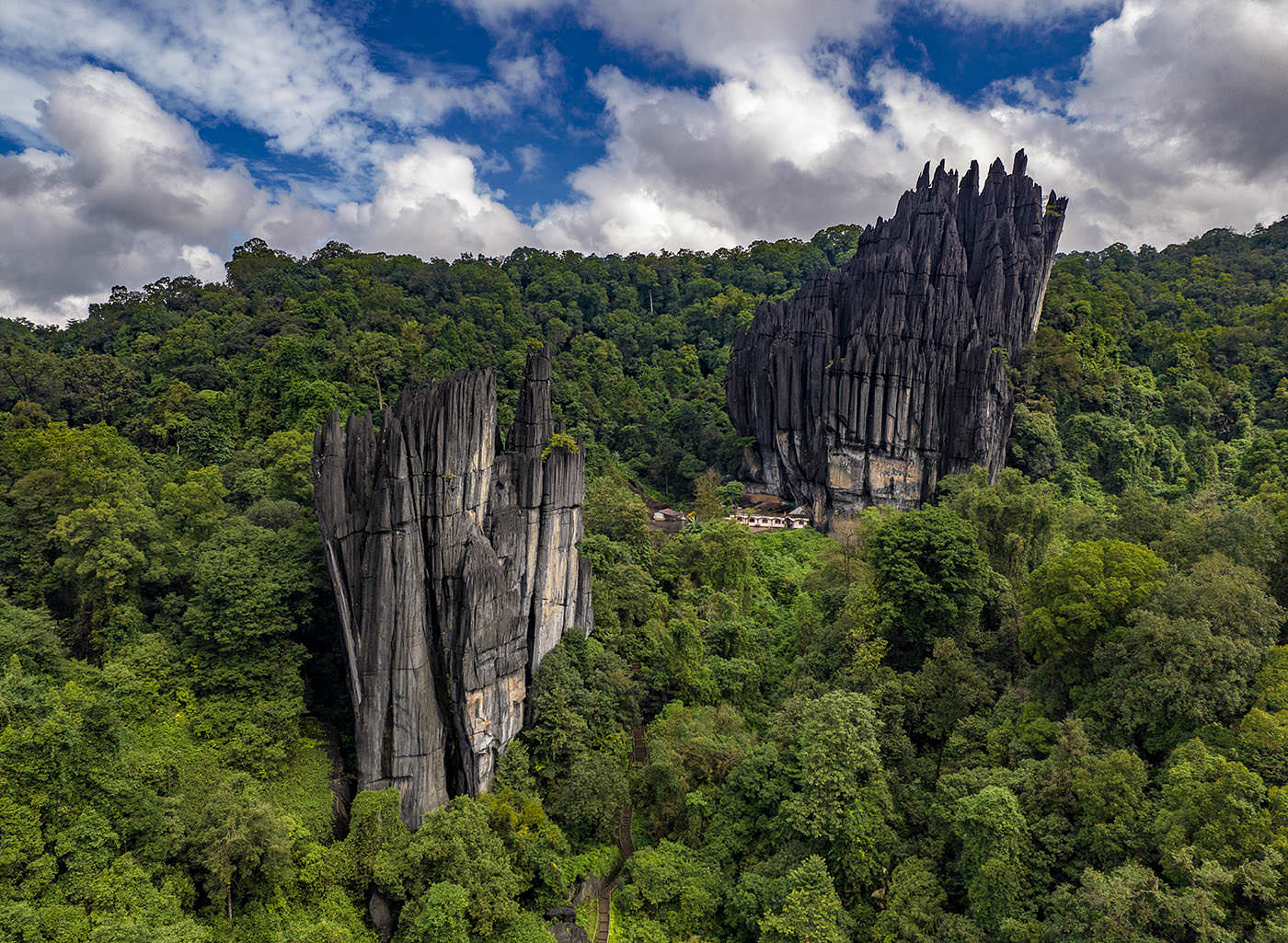
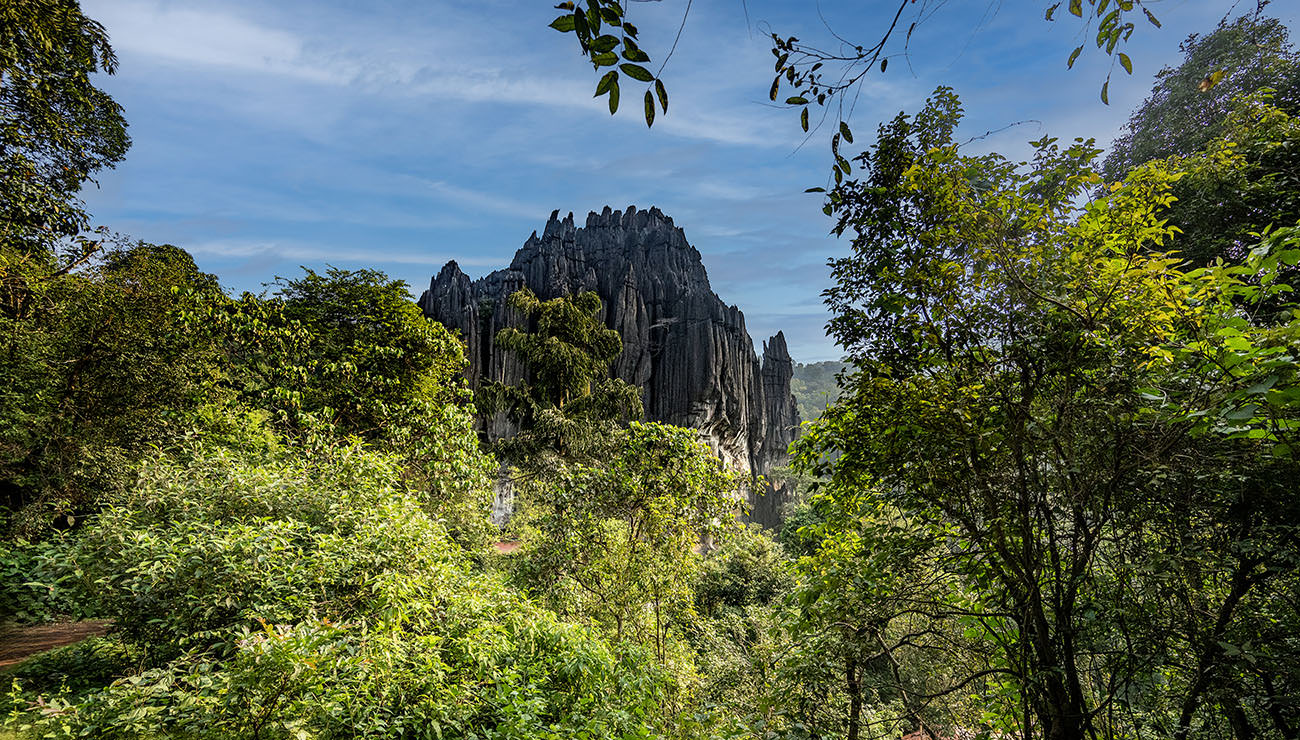
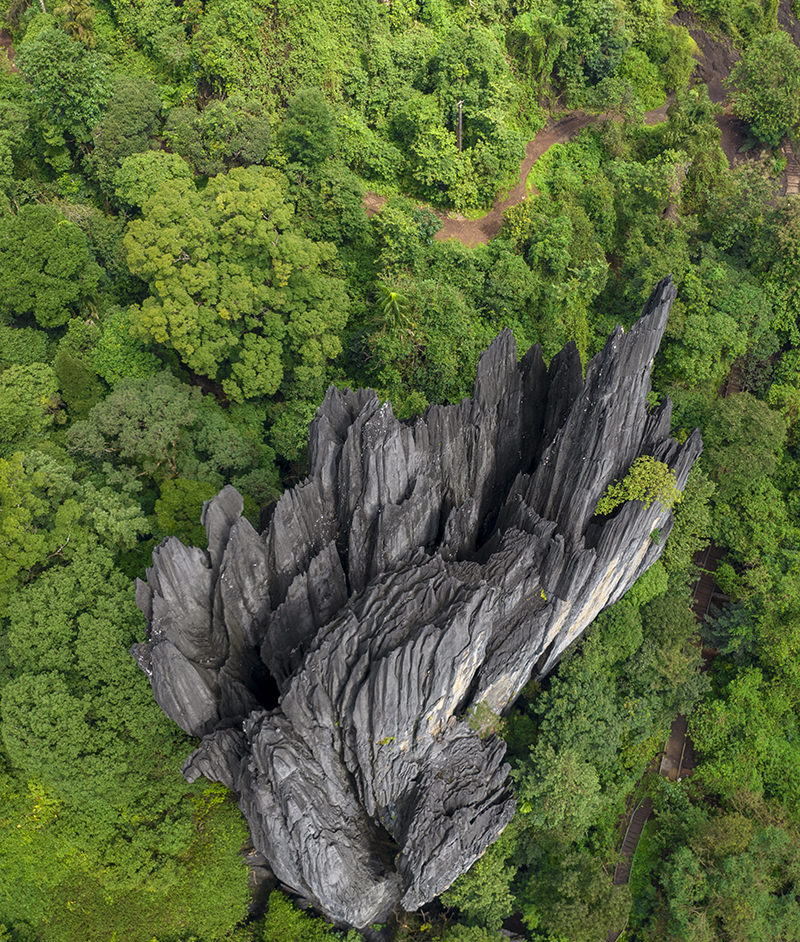
Hidden within the rain drenched emerald folds of the Western Ghats, Yana feels like a secret whispered by the forest itself. About 25 kilometers from Kumta and roughly 40/50 kilometers from Gokarna (dependent on the route which defines which side of Yana you get to), this quiet village in Karnataka shelters extraordinary limestone rock formations — two of the most prominent of which are Bhairaveshwara Shikhara and Mohini Shikhara — that rise like monolithic overseeing guardians, from the heart of the jungle. Formed of jet-black limestone and shaped over millions of years by rain, wind, and time, they stand as both geological marvels and silent witnesses to an older, sacred rhythm of the land.
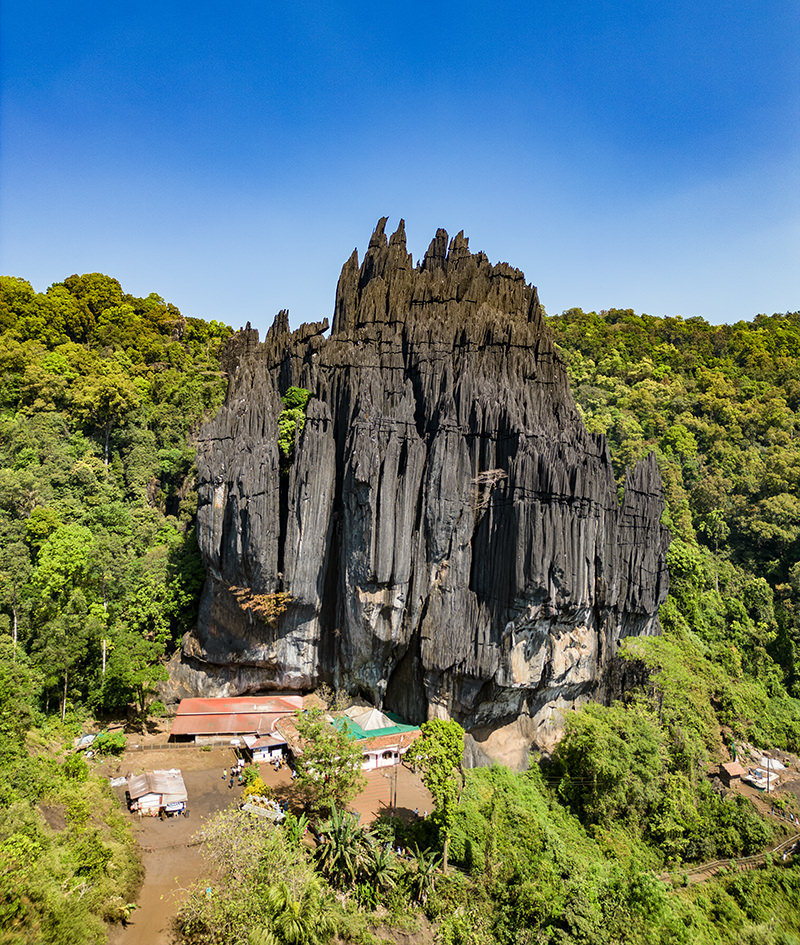
The first sight of Yana’s twin monoliths takes your breath away and is unforgettable. Bhairaveshwara Shikhara, the taller of the two, rises nearly 400 feet; a black cathedral carved by the hands of rain and wind. Beside it, the slender Mohini Shikhara mirrors its grace. At the base of the larger rock lies a Shiva temple, where water trickles endlessly to form a natural swayambhu linga. Step inside the cool cave and shafts of sunlight filter through cracks, illuminating the air like agarbatti/dhoop smoke … sacred, silent, and impossibly still.
In the forests of Karnataka, towering monoliths of limestone rise like ancient guardians — places where the earth, the divine, and timeless human memory still meet.
There are places you visit, and then there are places that stay with you long after you have left. Yana belongs firmly to the second kind. It does not try to impress you, and yet it does. Not in a loud or dramatic way, but quietly, almost gently, as if it knows that anything truly powerful does not need to announce itself.
You get there almost without realising when the shift begins. The roads grow narrower, the air feels different, and the trees begin to close in just a little. Somewhere along the way, conversations soften, and even the sound of your own thoughts seems to settle.
Whether you are coming from Kumta or taking the route through Sirsi, there is a moment when the outside world starts to fall away, and something slower takes its place.
If you come in from Kumta, there is a walk waiting for you. It is not difficult, but it asks for your attention. About a kilometre and a half through a shaded forest path, with roots underfoot and filtered sunlight slipping through leaves above. It is the kind of walk where you notice things you normally would not. The texture of bark, the rhythm of your steps, the faint smell of damp earth that lingers in the air. It is unhurried, and it makes you unhurried.
The other route, from the Sirsi Hubli road, is easier. The walk is shorter, more accessible, and for many people, more practical. This path also allows for a visit to Vibhuti Falls, which is worth the small detour. The water comes down in a steady, unassuming cascade, gathering in a pool that feels clean and inviting. It is the kind of place where you sit for a while without checking the time. If you are travelling with family or if long walks are not comfortable, this route makes Yana feel open to everyone.
And then, almost suddenly, the rocks appear.
There is no gradual introduction. One moment you are within the trees, and the next, they are standing in front of you. Tall, dark, and unmistakably present. Bhairaveshwara Shikhara rises sharply into the sky, its surface almost black, shaped by years of rain and wind into lines and curves that look both natural and deliberate. Beside it stands Mohini Shikhara, quieter in form but equally striking.
It is difficult to describe what you feel at that first sight. It is not just scale, though the scale is impressive. It is something else. A sense of standing in front of something that has been here far longer than you, and will remain long after. There is no rush here. No urgency. Just presence.
At the base of the larger rock is a small temple dedicated to Shiva. It is simple, almost understated, and that is what makes it feel right. Inside, a steady drip of water forms a natural linga, continuously, without interruption. There is something deeply grounding about that. No machinery, no intervention, just time and water and stone, doing what they have always done.
The cave around it holds sound differently. Even a quiet footstep seems to linger for a moment longer. Light enters in narrow shafts, touching parts of the rock and leaving others in shadow. It feels cool, contained, and quietly alive.
To the people here, Yana’s story isn’t a legend. It’s a living truth, told by the stones themselves.
The Spiritual Stories That Still Breathe
People who have lived around this region for generations speak of events that took place here in ancient times. They speak of Bhasmasura, of the power he carried, and of how that power turned upon him through the presence of Mohini. These accounts are not told as distant imagination. They are spoken of as something that belongs to the memory of the land itself. The dark colour of the rocks is understood as a mark of that time, something left behind, something that remains.
The stories tell of Bhasmasura, a being who, blessed by Shiva himself, with the power to turn anyone to ash by touch, turned his arrogance toward Lord Shiva. To save him, Vishnu appeared as Mohini, the divine enchantress. Enchanted by her beauty, Bhasmasura mirrored her dance, and in the final step, placed his hand upon his own head, and vanished in a burst of fire and turned to ash.
The dark soot-black hue of Yana’s rocks, locals say, is the trace of that ancient fire, the mark of transformation itself. It’s a story that carries the weight of faith, not fantasy but an echo of something that once truly was. When one stands beneath those towering rocks, it’s easy to understand why such stories stand through time: the land here feels alive, aware, and quietly eternal.
The stories of Yana have lived for centuries; carried in temple chants, fireside conversations, and the voices of elders who speak of the place as if it remembers them too.
Whether you come with belief or simple curiosity, it is hard to stand there and not feel that the place holds a certain depth. Not something you can easily explain, but something you sense.
Yana does not overwhelm you with activity. There are no large establishments here, no lines of shops, no noise competing for your attention. A few small stalls near the entrance offer coconuts, simple drinks, and snacks. That is enough. In a way, anything more would feel out of place.
Yana is not grand in the way some destinations are. It does not offer a list of things to do or experiences to tick off. What it offers is simpler, and in many ways, rarer. A chance to be still. To stand in a place where time feels less urgent. To feel, even briefly, that you are part of something that is not in a hurry.
And perhaps that is why people return. Not because they missed something the first time, but because they want to feel that quiet again. That sense of being held in a space that asks nothing from you, but gives something nonetheless.
You leave Yana without any clear conclusion. There is no single moment that defines the visit. It is a collection of small things. The walk. The first sight of the rocks. The coolness inside the cave. The sound of water. The stillness that settles in without being noticed.
And then, later, maybe days or even weeks after, you find yourself thinking about it again. Not in detail, but in feeling. A kind of calm that is hard to place, but easy to recognise.
That is Yana. Not something you fully understand while you are there, and not something you need to. It is enough that it leaves something behind.
Travel Notes:
Getting There
- Route 1 (via Kumta): ~60 km by road, followed by a scenic 1.5 km uphill forest walk with a rivulet flowing alongside with the occasional sightings of the resident wildlife. Best for those who enjoy walking through nature.
- Route 2 (via Sirsi–Hubli road): ~45 km. Short, easy 500 metre walk, suitable for families or those with mobility constraints. This route also allows for a visit to Vibhuti Falls (8 km detour).
Best Time to Visit
- October to March: Cool and ideal for walking. The air is cooler, the paths are easier to walk, and the forest feels full without being overwhelming.
- April and May: Warm but manageable; good for photography.
- June to September (Monsoon): Lush, misty, and beautiful but slippery. The entire region turns intensely green. Everything feels alive. But the rains can be strong, and the paths can become slippery.
- Check trail conditions, site open status before travel. But the rains can be fierce. In 2025, Yana was closed for nearly two months after heavy rainfall and landslides reshaped parts of the trail, and in 2026, it was closed for nearly a month, and at other times has been randomly closed based on the severity of the rainfall.
Entry & Timings
- Open from sunrise to sunset; entry is through the temple, and is ₹10 per person as of 2026 August.
- The temple beneath Bhairaveshwara Shikhara is supposed to be open throughout the day, but it is random.
Related Posts
Gokarna: A Sacred Town Where Life and Death Share the Same Silence
Explore the spiritual depth of Gokarna, the Dakshin Kashi of India. This guide uncovers the secrets of the Mahabaleshwar Temple, the legend of the Atmalinga, and the profound silence that defines this sacred town. Discover the hidden side of Gokarna where spirituality and nature coexist.
